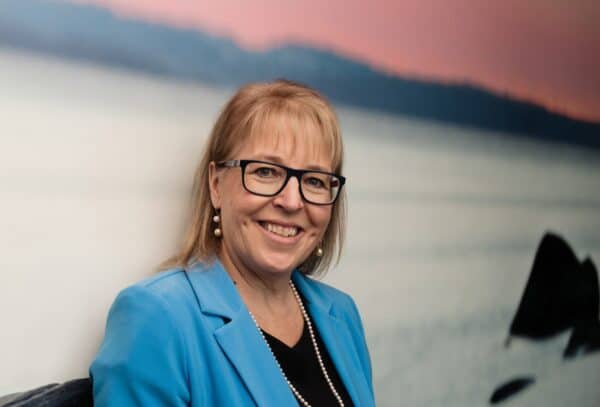
As an advanced disease navigator, Laurie Laughren ensures individuals with advanced cancers don’t have to face their journey alone.
By Nathan Kunz
Photographs by Adam Moser
Life after a cancer diagnosis looks different for everyone.
Prognosis and treatment are one thing, but there are also conversations around money, transportation, mental health and other important, sometimes difficult, topics. The result can be dizzying and, in many cases, isolating — especially when facing an advanced disease.
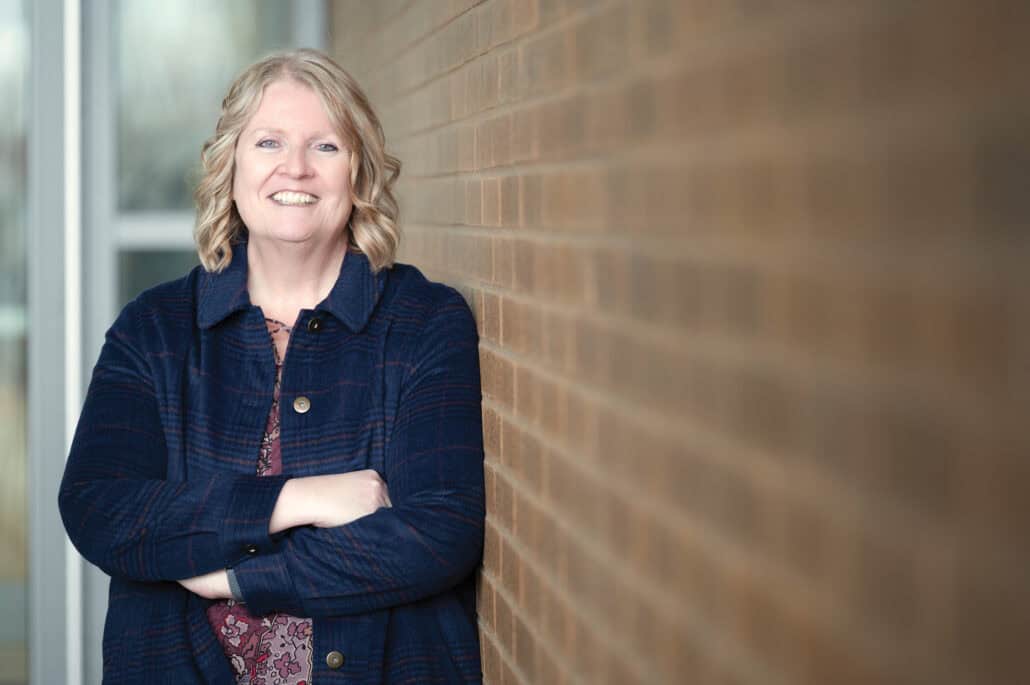
That’s where Laurie Laughren comes in.
“A cancer diagnosis can leave people feeling vulnerable. For anyone unfamiliar with how the health care system works, it’s confusing and frightening,” says Laughren. “I’m ready to step in and do whatever it takes to help and support.”
Laughren’s job as an advanced disease cancer patient navigator at Medicine Hat’s Margery E. Yuill Cancer Centre is all about support. The relatively new position sees her accompany individuals with cancer and families during advanced cancer journeys — typically stage three or four diagnoses in non-curative situations.
These supports differ by situation. Typically, individuals are referred to Laughren at the same time they’re connected with an oncologist. Soon after diagnosis, Laughren meets the individual and their family to explain tests, wait times and treatments. She also explores individual needs, connecting them with social workers, dietitians, financial supports and palliative care providers. For many patients at the Margery E. Yuill Cancer Centre — a regional site that also supports surrounding rural communities — coordinating transportation to Lethbridge, where the nearest oncologists are based, is another key form of support.
After the initial connection, Laughren follows up regularly during waiting periods, checking in on her patients by phone and ensuring they never feel lost in the system. Additionally, Laughren connects with patients by supporting them as their cancer progresses and as individuals transition to a stage where treatments are no longer available, when they are discharged from the cancer centre to care in the community.
“Representing oncology in those moments and explaining things, I think, has made a big difference,” Laughren says.
Lifelong learning
The advanced disease navigator role is new — Laughren is the first to hold the title at the Margery E. Yuill Cancer Centre since the program began in March 2025. But her connection to health care runs deep.
Growing up in an air force family, Laughren moved around Canada throughout childhood. She began her career working as a cook and a dietary aide for the Heartland Health Region (now the Saskatchewan Health Authority) in Rosetown, Saskatchewan.
It was Laughren’s next role in environmental services — a specialized form of housekeeping — that really inspired her. The job had Laughren interacting with patients and families regularly, checking in during her rounds and watching interactions with nurses and doctors.
“I had nurses say to me, ‘You would be a good nurse. You should go into nursing,’” Laughren says. “I just thought, ‘You know, maybe they’re right. Maybe I need to try it.’ And I’m glad I did.”
Laughren has now held a career in care for more than 25 years.
Laughren earned her licensed practical nurse (LPN) diploma through Edmonton’s NorQuest College, before attending the University of Saskatchewan to complete a registered nurse (RN) degree. It was during this program that Laughren was first exposed to oncology through a practicum in Saskatoon.
While her first position in Medicine Hat was in palliative care, Laughren was called to cancer care shortly after. She transferred to the Margery E. Yuill Cancer Centre, where she has “done every role you can think of” including navigation, triaging and administering chemotherapy.
A return to palliative care followed, as well as certification in both oncology and palliative care through the Canadian Nurses Association and a master of nursing through the University of Regina. After a year managing the medical-surgical unit at the Medicine Hat Hospital, Laughren returned to palliative care in a consultant capacity for six months before taking leave to help develop the advanced disease navigator position.
“The role brought together everything I value in nursing: oncology, palliative care and proactive, relationship-based support,” Laughren says.
Putting people first
At its core, the advanced disease navigator role exemplifies the human side of health care.
Laughren says she always makes a point to understand individuals’ support networks during initial meetings, whether that be family, friends, pets or religious communities. She also asks about their personal goals — she recalls empowering one individual to take a dream train trip to Vancouver after his cancer progressed.
These interactions also often mean exploring palliative care options, a topic that carries its own stigma. Laughren says challenging misconceptions is an important part of her job, explaining that in many cases, prioritizing pain management, relief and quality of life through palliative care represents the best care available. In fact, studies show coordinating oncology care with early palliative care leads to longer lives, shorter treatment delays and greater support.
“By bridging oncology, palliative care and community services, I can support quality of life,” she says, “while helping patients feel informed, supported and never alone.”
Sharing the moment
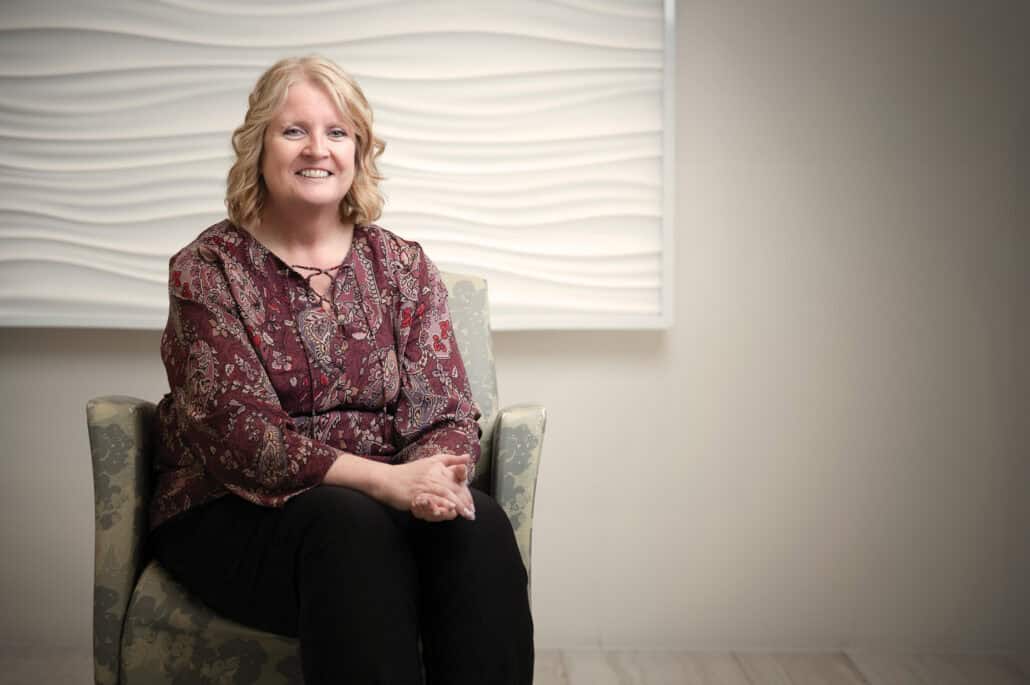
Supporting individuals with cancer on a human level is something Laughren prioritizes. And according to those she works closely with, it’s something she excels at.
“Laurie has this calming way about her that really connects with patients,” says Melissa Linkson, an oncology social worker at the Margery E. Yuill Cancer Centre. “She’s just really good at focusing on the needs of the patients and making sure it’s patient-centred care, from beginning to end.”
Linkson regularly collaborates with Laughren, both in providing counselling services for individuals with cancer via Laughren’s referrals and working alongside Laughren to find external supports and ease cancer journeys. In one such case, Linkson recalls accompanying Laughren to meet an individual before his transfer to hospice.
Entering the dimmed room, Laughren knelt by the bedside, took the patient’s hand and explained to him what was happening, never breaking eye contact during the interaction. Linkson says she was in awe of Laughren’s ability to connect completely with them, all in a matter of moments.
“It was just such a tranquil experience to be a part of,” says Linkson. “It was almost breathtaking, the way that she focused all of the attention on this patient. He was the centre of the room.”
In an advanced disease-focused role, the days are rarely easy. Tough conversations and outcomes come with the title, though Laughren says she makes a conscious effort to never make the news of someone’s passing feel routine.
Instead, she takes a moment to reflect on the journey. Then, she looks around her to find hope — there’s hope in her colleagues at the Margery E. Yuill Cancer Centre, in the treatment area where Albertans with cancer are seeing improvements and in the support systems she helped to empower.
“Everyone’s life is worth acknowledging,” she says. “As a nurse, we want to fix. And unfortunately, there are things you can’t fix. But you can always provide support.”
Laurie Laughren’s career highlights
2001
Laughren’s career begins in non-nursing roles in the Heartland Health Region (now called Saskatchewan Health Authority). She works in Dietary and Environmental Services and gains firsthand experience in patient support and hospital operations.
2006
Inspired by earlier patient interactions, Laughren earns her licensed practical nurse diploma and begins working in the Biggar and District Health Centre in Saskatchewan.
2011
Laughren expands her scope and impact through a bachelor of science in nursing degree at the University of Saskatchewan.
2012
She relocates to Medicine Hat, working for 10 years in both palliative care and oncology nursing.
2022
Laughren completes her master of nursing as a clinical nurse specialist with a focus in palliative care.
2024
After serving as medical surgical unit manager at the Medicine Hat Regional Hospital, she takes on the role of palliative care nurse consultant.
2025
Laughren becomes the first advanced disease cancer patient navigator at the Margery E. Yuill Cancer Centre.