Dr. Safiya Karim goes beyond conventional treatment methods, offering individuals with cancer the chance to redefine their journey through integrative oncology care.
By Nathan Kunz
Photographs by Jared Sych

When Albertans enter into treatment, they’re often eager to clear the road ahead and find ways to live longer and better. To help them do that, Dr. Safiya Karim began exploring integrative oncology.
Karim’s road to oncology began while she was in medical school at the University of Calgary in 2008. She took an elective class taught by an oncologist, which introduced her to the potential of cancer care and oncology’s fast-evolving treatments, medications and outcomes. She saw the chance to create lasting connections with patients. Karim knew she had found her calling.
Nation-wide education and training followed. After three years of internal medicine training at the University of Saskatchewan and two years of medical oncology training at the University of Toronto, she earned a master’s degree and completed a fellowship in health services research at Queen’s University.
In 2018, Karim was called back to Calgary, the city where she was raised, by an opportunity to practice oncology. Ultimately, it was the city’s cancer care community that sealed her return. “It’s the best place for me to practice, with a group that is really supportive, engaging and collegial,” she says. “I love it here.”
“Hopefully I can have some type of positive impact on every patient I come in contact with.”
—DR. SAFIYA KARIM
Karim settled into her role as a medical oncologist and clinical associate professor at the University of Calgary’s Cumming School of Medicine. She noticed that, after diagnosis, patients would frequently ask her: “What can I do to help myself through this?”
That’s where integrative oncology comes in. It involves complementing conventional treatment — such as chemotherapy or immunotherapy — with evidence-based mind and body practices, natural products and lifestyle modifications. These can include practices like meditation, acupuncture, yoga and tai chi, with the goal of improving overall health and quality of life before, during and after a cancer diagnosis. As the medical director of the Alberta Complementary Therapy and Integrative Oncology (ACTION) Centre, Karim is at the forefront of recommending these patient-centred care therapies in Calgary.
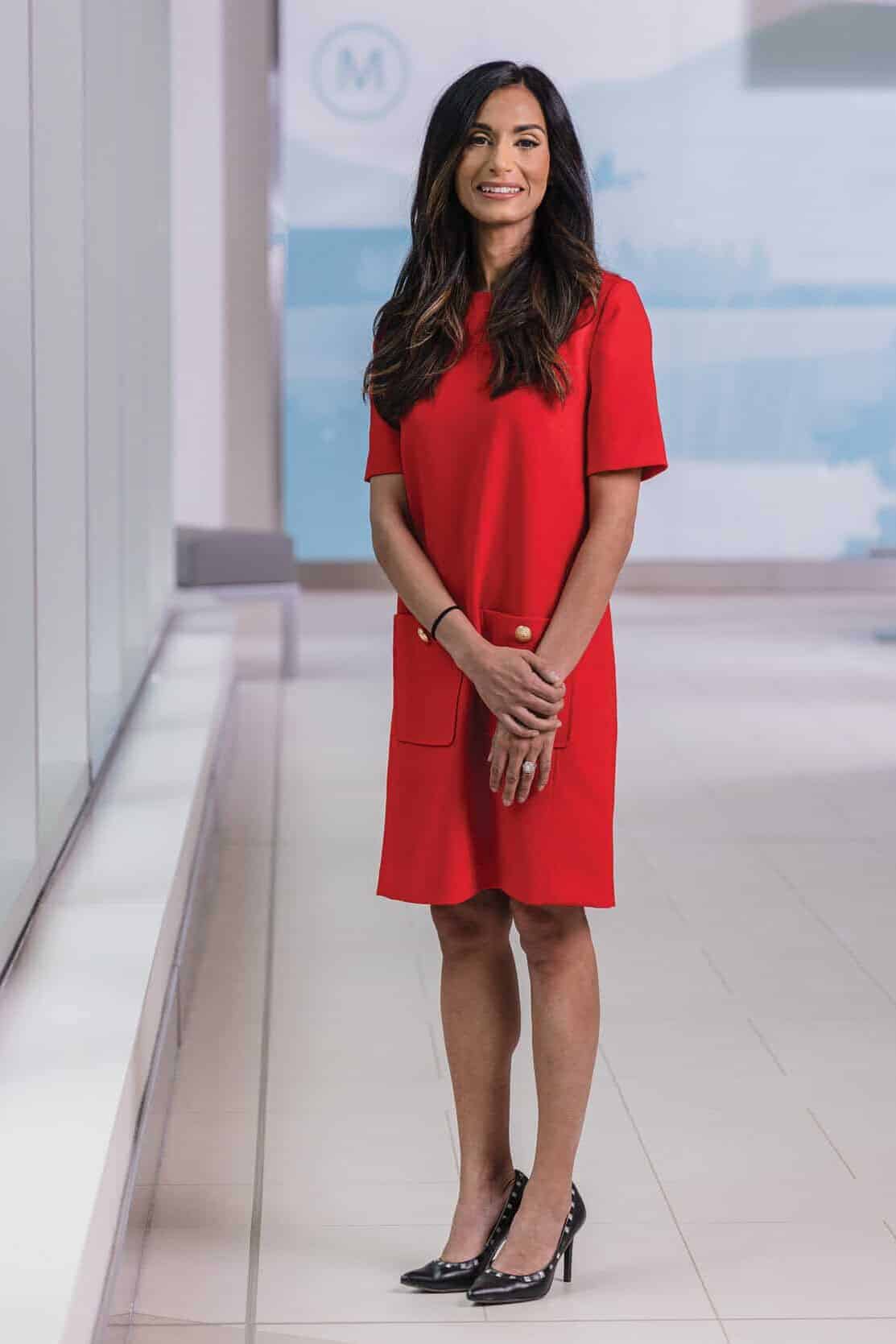
“It’s a way to empower patients to be able to do something for themselves and get that autonomy back,” says Karim. “It’s really motivating to see how we can help patients in different ways.” Karim splits her time between clinical work, teaching and research. She cares for individuals with gastrointestinal and genitourinary cancers at the Arthur J.E. Child Comprehensive Cancer Centre (Arthur Child) and conducts research projects, including those at the ACTION Centre.
One such research project was an innovative pilot study she led from 2022 to 2024 at the Tom Baker Cancer Centre (formerly Calgary’s cancer centre, which was replaced by the Arthur Child). The study saw roughly 100 individuals with cancer receive integrative oncology support. After learning about diagnosis, treatments, health history and lifestyle, Karim and her team created personalized lifestyle modifications and mind-body therapies, along with recommendations for external support and connections to partner organizations.
Karim explains that, in some cases, integrative oncology may offer an alternative to pharmacological treatment, as it avoids cycles of treating side effects with more drugs. “It’s a whole-person approach to their care, versus individually managing a variety of symptoms with different medications.”
While final results from the study are expected later this spring, early feedback included significant reductions in pain, fatigue and anxiety. Another data point showed improvements in overall health.
The positive results should come as no surprise. Integrative oncology programs are now found in top US institutions, including MD Anderson and Memorial Sloan Kettering Cancer Center. Adoption in Canada has been slower. Calgary’s ACTION Centre, established in 2018 under Dr. Linda Carlson, was the first integrative program embedded into a Canadian cancer centre.
While more clinics and programs are now emerging across the country, Karim still represents something novel in her leadership — namely, her training. Karim explains that patients often turn to alternative health practitioners, but having a medical oncologist with appropriate integrative oncology training leading the way creates more cohesion between conventional cancer treatment and complementary support.
Karim adds that Albertans with cancer don’t need to choose between conventional or complementary approaches; integrative oncology is about combining these treatment styles together in a safe manner.
“Hopefully I can have some type of positive impact on every patient I come in contact with,” says Karim. “If I can be someone who made a contribution in their journey, I’ll be happy.”