World-leading research and innovations help shape Alberta’s cancer care landscape for the better.
By Olivia Piché
The eSIM program
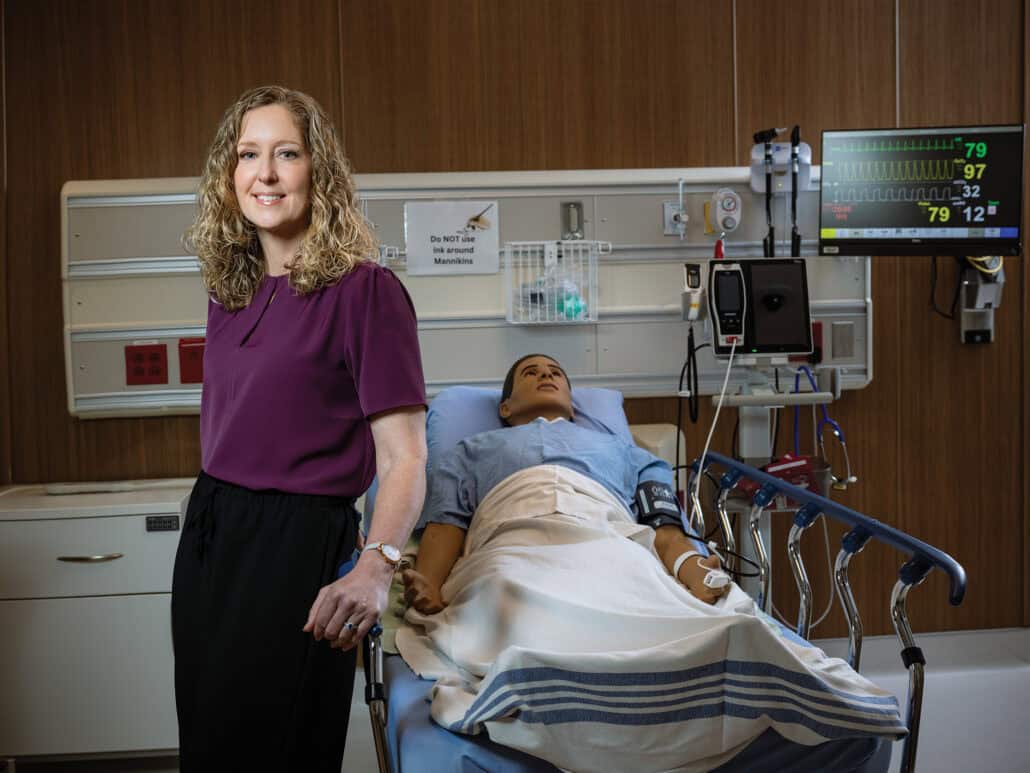
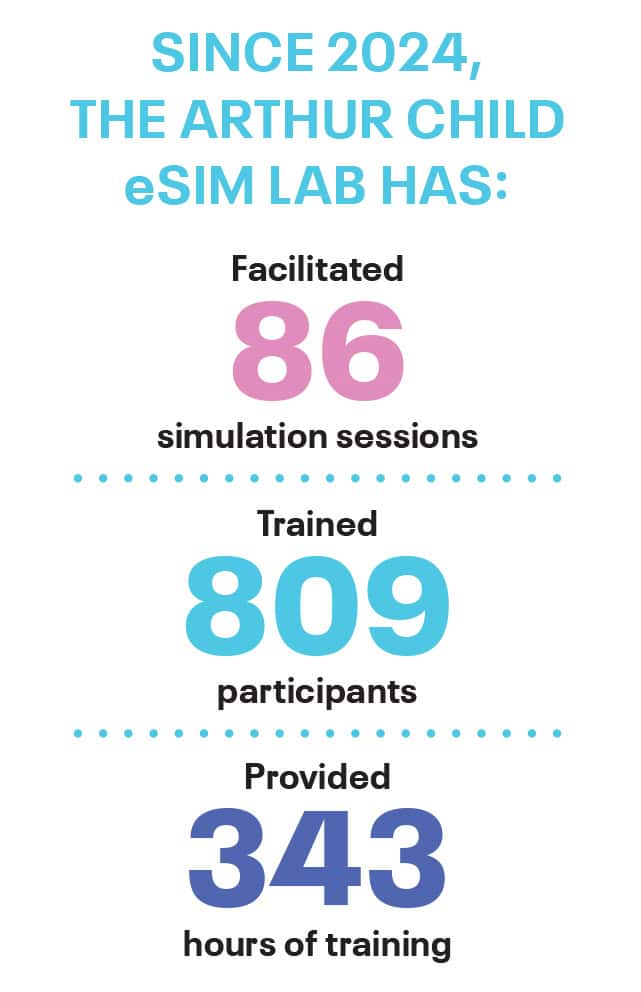
Ongoing training and education are vital to help health care providers deliver the best care — and the Alberta-wide eSIM program is one initiative that offers ongoing education. It recreates real-life scenarios with manikins and equipment, allowing health care providers to learn in a supportive and controlled environment.
Jillian Gautschi-Nicol is the simulation consultant at the Arthur J.E. Child Comprehensive Cancer Centre (Arthur Child) eSIM Lab. She leads participants through different simulation scenarios, where manikins replicate patients in real-life health care situations. Participants elevate their skills in patient care, practicing everything from using different pieces of equipment to crisis responses in urgent situations. The simulations focus on scenarios that replicate processes and workflows, such as delivering a new cancer treatment or identifying and responding to a deteriorating patient. Health care teams run through the processes during a simulation exercise, identifying any misunderstandings or safety issues along the way, ensuring everything flows as smoothly as possible.
“Health care teams have a wealth of knowledge and experience. Through simulation-based education, they are able to apply that knowledge into practice, which can lead to safer patient care areas,” says Gautschi-Nicol.
The simulation scenarios represent stressful situations while simultaneously ensuring participants’ psychological safety. For example, in the radiation therapy department, the education team aims to have all its staff participate in a code blue simulation, replicating an in-hospital emergency alert where a patient is experiencing a life-threatening emergency.
“The simulation allows the staff to practice using the equipment, strengthen communication skills, clarify roles and increase their medical knowledge when caring for patients who require enhanced care,” explains Gautschi-Nicol. “I’ve gotten a lot of feedback from staff that participated in those simulations about how when they’ve had to activate a [real] code, they felt more confident and prepared.”
Gautschi-Nicol adds that the biggest benefit “is when you have staff that feel supported in their education, and they’re given opportunities to practice clinical events that will improve the care they’re providing, helping to create safer work environments which benefit patients.”
Self-administered chemotherapy
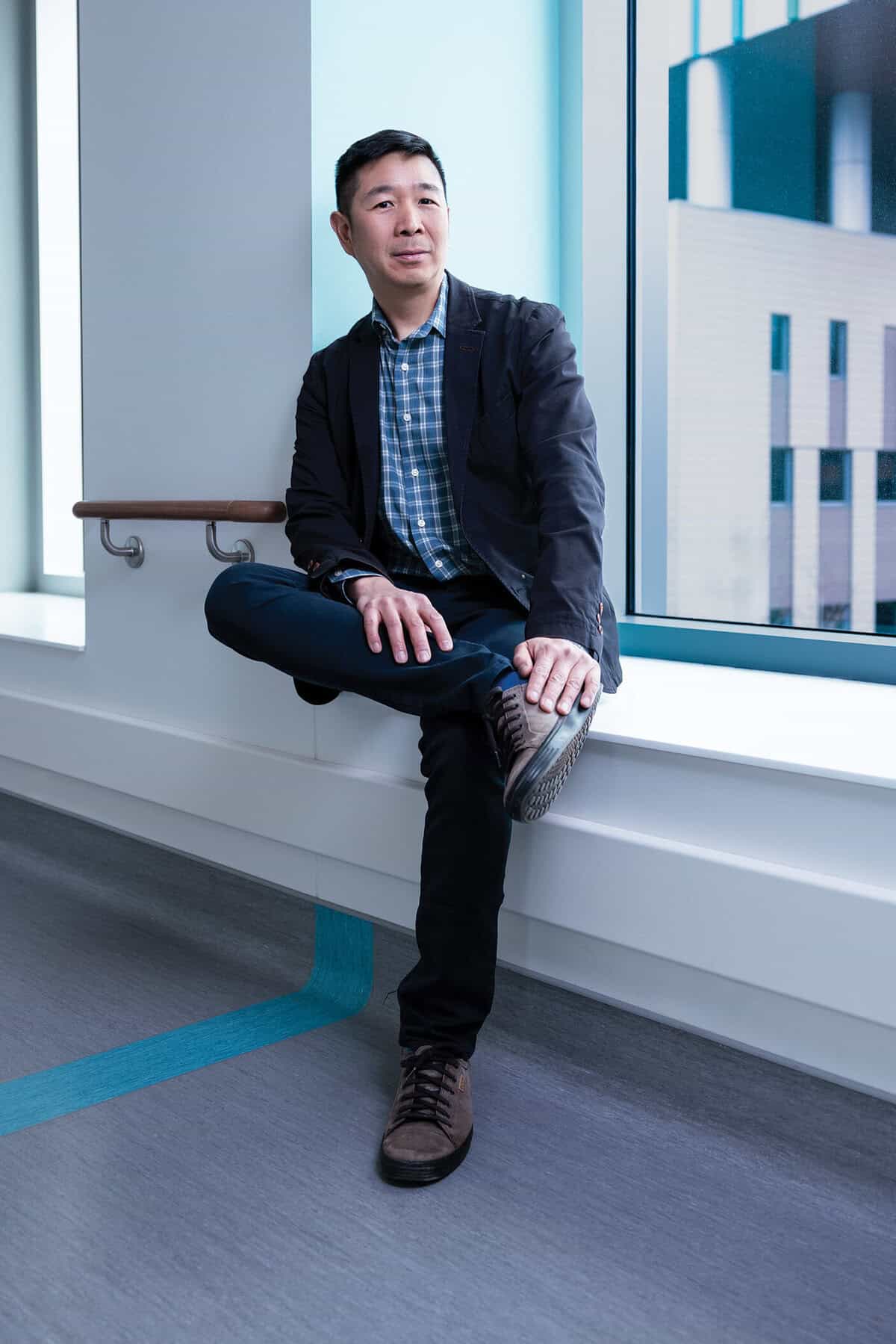
Typically, chemotherapy is administered at a cancer centre. It’s a potent treatment that can have side effects and is not widely thought of as something patients can give themselves at home. Dr. Jason Tay, a hematologist at the University of Calgary, is challenging this notion and suggesting that a certain chemotherapy — a drug called bortezomib — can be self-administered.
Tay led a research study where patients self-administered this chemotherapy drug from the comfort of their home through a subcutaneous injection. The study was specifically for patients with myeloma, a blood and bone marrow cancer, who are receiving bortezomib.
Historically, patients receiving this drug would usually need to commute to a cancer centre once a week to receive the injection. “We thought that we should try this in a self-administered setting, because the injection itself takes a couple of seconds to give. It’s a small syringe and we thought that folks could potentially give it to themselves at home,” says Tay.
Thanks to funding from the Alberta Cancer Foundation, Tay and his team opened two sites for this study, one at the Arthur J.E. Child Comprehensive Cancer Centre and one at the Cross Cancer Institute, “to allow folks who are supported by their primary cancer doctor and wanting and capable of giving themselves these injections to do so,” says Tay.
The study ran from May 2020 to May 2025. Although it’s no longer open to new patients, the Alberta Cancer Foundation funding supported patients who enrolled in this study to continue self-administering the drug.
Tay explains the benefits of self-administered chemotherapy are twofold: it could empower individuals with cancer to take control of their health and it could save cancer centres the costs and resources of a patient visit.
“If we’re able to save [people with cancer from] those weekly visits for injections, this system can potentially save the cancer centre money, but also provide more time and space for our increasing population in Calgary,” explains Tay. “It’s even more pertinent in places that are more rural, where the travel times are longer.”
While self-administering is only available for the one type of drug for now, the study’s success points to a hopeful future, considering many other cancer treatments can be injected.
The Triffo Virtual Care Centre

A new five-room virtual care centre has opened at the Cross Cancer Institute (Cross), improving access to care for rural patients. Thanks to a generous donation from Ron Triffo, the Triffo Virtual Care Centre was established last summer.
In the centre, the five rooms are used by many oncologists and health care providers that deliver virtual care services. One of them is hematology nurse practitioner Allan Black, who connects with his patients at their local clinic through a TV screen. He’s able to conduct assessments, plan future treatments and answer questions without requiring patients to travel to the Cross.
Prior to the centre’s opening, Black held his telehealth and virtual clinic in the Cross’s basement, using dated equipment. Now, the process has been streamlined. Black just needs to walk into the room and his patient is already on the screen.
“It’s really just optimized the way I deliver my care, both in its efficiency and efficacy,” says Black.
The virtual care model at the Cross was the first of its kind in Alberta, servicing Lloydminster as the province’s f irst clinic under this model. Although Black holds a telehealth and virtual clinic once a week through the Lloydminster site, with this new centre, he’s hoping to expand the service to other rural sites so more Albertans can access improved virtual care.
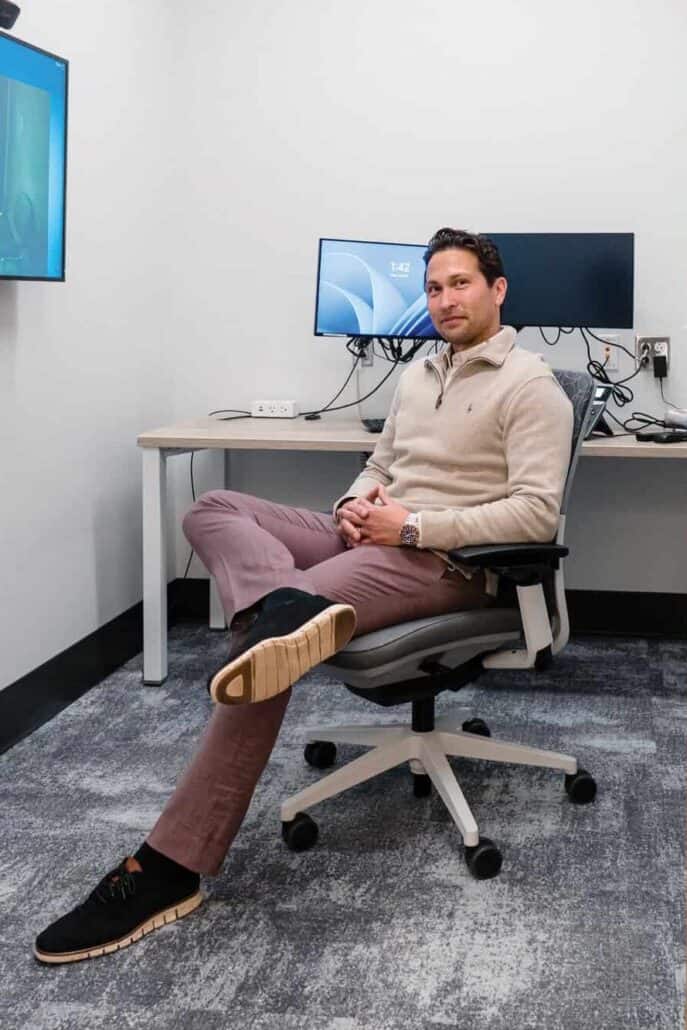
Photo by Buffy Goodman.
The new setup offers clearer images, advanced equipment and greater efficiency, increasing the number of rural Albertans he can care for virtually. And since the virtual care process is now much easier, Black has more than doubled the number of patients he sees from one or two a day to five or six.
For rural patients, the Triffo Virtual Care Centre saves them a trip to Edmonton — yet they still get great care. Telehealth is instrumental in enabling individuals with cancer to see their health care provider, even if virtually. “It allows for optimized care that comes with seeing a person face to face,” explains Black. “[Being face to face] allows patients to get in that headspace to tell me and show me everything they need to, and be as transparent as possible, so that my care can be complete.” He adds that patients can have their loved ones with them if they wish — something not always possible with a long commute. Fewer in-person patient visits can help save resources and dollars, and for those facing cancer, not having to visit a cancer site far from home can benefit their well-being.
“The virtual clinic made me feel supported between appointments,” says a patient at the Lloydminster clinic. “I could get help with symptoms quickly, ask questions without waiting weeks and feel reassured knowing my care team was still closely involved — even from home.”
“I can’t say enough good things about the centre,” adds Black. “It’s been a game changer.”