As recipient of the Richard R. and Linda A. Singleton Summer Graduate Scholarship in Cancer Research, Jinsu An analyzes why some individuals with head and neck cancer don’t respond to treatment.
By Karin Olafson
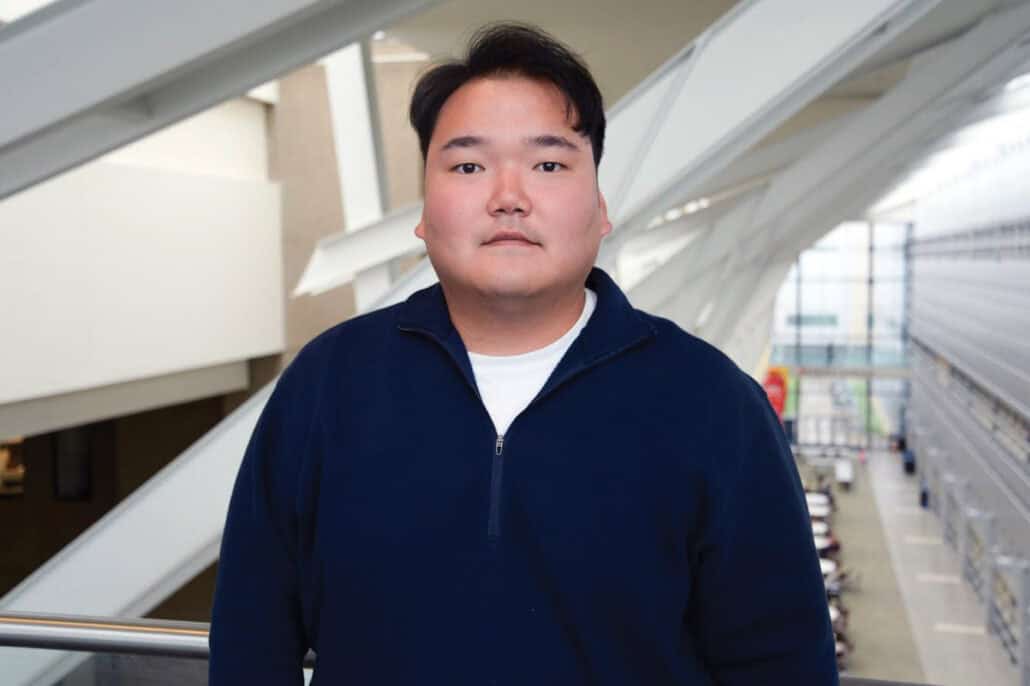
Jinsu An had always dreamed of becoming a medical doctor one day. But as he worked through his undergraduate degree at the University of Calgary, he discovered the power of research — and his dreams pivoted.
An majored in bioinformatics, a program that combines health science, biology, statistics and computer science. During his fourth year, he completed an honours thesis under the supervision of Dr. Pinaki Bose, an established researcher in bioinformatics and precision oncology and the director of a head and neck cancer research program at the University of Calgary.
“I’ve always wanted to help people. During my undergraduate degree thesis, I worked with Dr. Bose and found out that doing bioinformatics can help cancer patients — there are many ways that I can contribute to the medical field by doing research,” says An.
An went on to do his master’s degree with a specialization in bioinformatics, continuing to work under the direction of Bose out of the Arnie Charbonneau Cancer Institute. During this time, An received the Richard R. and Linda A. Singleton Summer Graduate Scholarship in Cancer Research, which provided funding for his work between May 2025 and April 2026, allowing him to focus on cutting-edge research in head and neck cancer treatment.
An studied immune checkpoint inhibitors. This is a form of immunotherapy that helps the immune system recognize and attack cancer cells by blocking signals that cancer can use to evade an immune response. When effective, immune checkpoint inhibitors boost the immune system, offering some individuals a more effective treatment option and improved outcomes. However, only 15 to 20 per cent of head and neck cancer patients respond well to this therapy. An’s master’s research aimed to understand why. Using an advanced technology called spatial transcriptomics, An analyzed patterns of gene expression while preserving information about where cells are located within the tumour.
“Using this information, we may be able to better predict whether a patient is likely to respond to the immune checkpoint inhibitors therapy or not,” explains An. By looking for spatial patterns in gene expression that suggest how cells may be interacting, An can try to determine which patterns are associated with treatment resistance. This information could eventually help physicians identify patients who are less likely to benefit from the therapy, and consider alternative treatment options.
Now in the PhD program, An is using spatial transcriptomics to study another major challenge in head and neck cancer: recurrence. Focusing on oral cancer, An hopes to better understand the biology underlying recurrence and ultimately help improve care for individuals with cancer who are at risk of their disease returning.
An says he wouldn’t be doing this research without the support of donors.
“I really thank donors for their contribution,” says An. “Because of this scholarship, I was able to just focus on my research and embark on my PhD journey.”