Clinical trials are multi-phase research studies that require years of testing and thousands of participants. We break down what happens in each phase.
By Alicia L’Archevêque
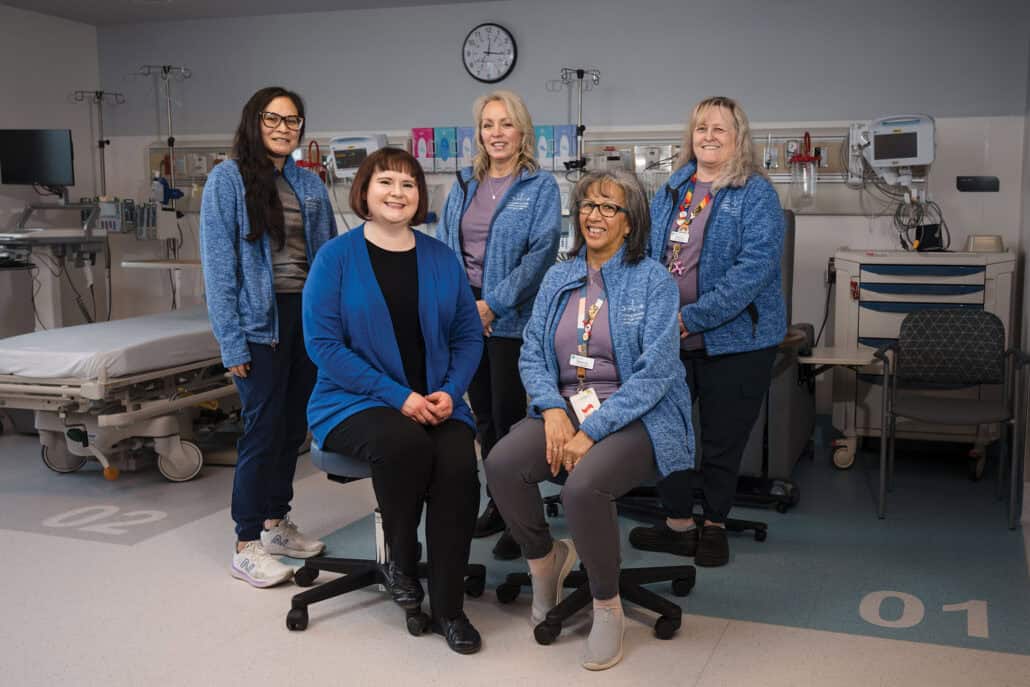
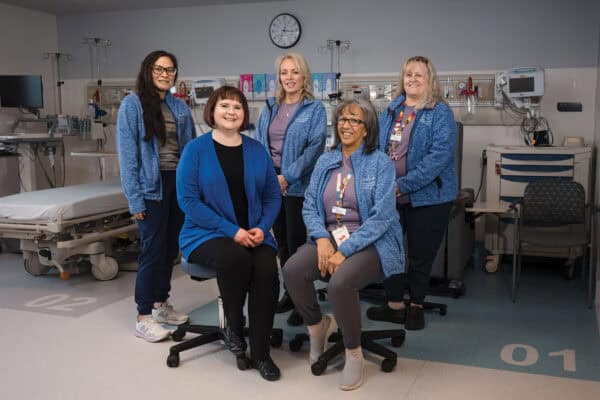
with a few of her team members. Photo by Buffy Goodman.
Before new methods of diagnosing, screening and treating cancer become the standard of care and available to the public, they must first undergo cancer clinical trials — a form of research involving human participants that take place over many years.
These research studies determine if new treatments, such as drugs, therapies or medical devices, are safe and effective for use as standard of care. They also study better ways to detect cancer, new combinations of existing treatments, ways to prevent cancer from coming back and how to improve patient care overall.
While participation in clinical trials doesn’t guarantee results for individuals with cancer, those involved are directly powering the progress of cancer care. Alberta is a major hub for clinical trials, hosting more than 200 active cancer clinical research studies.
For safety reasons, most cancer clinical trials involve three successful phases before public distribution, which can take up to 10 years. However, individual experiences will vary depending on the type of trial and when a participant enrolls.
Here’s a breakdown of what each phase entails and the general timeline.
Phase 1
The first clinical trial phase determines how the treatment should be administered, the dosage and its side effects on patients. This phase requires 15 to 30 participants, and it is typically the shortest phase, lasting less than a year. Still, the timeline of this stage varies based on the trial type.
Phase 2
The second phase ensures that the new treatment is effective at controlling a particular kind of cancer and examines how it affects those patients. Less than 100 participants are involved in this phase, and the average timeline for this phase sits at around two years.
Phase 3
In the final phase before approval for public use, the new treatment is compared with current standard treatments to prove its efficacy, and requires significantly more participants. Anywhere between 100 and several thousand participants are involved, and this phase can last up to four or five years. Post-approval, an additional clinical trial phase (or phase 4) monitors long-term impacts.
How philanthropy can set the pace
While clinical trials can be funded by a pharmaceutical company, research centre or university, philanthropy moves the needle in a big way.
Donor-funded research and clinical trials have directly contributed to a dramatic shift in Alberta’s cancer outcomes.
That’s why, in July 26, the Alberta Cancer Foundation announced a historic $35-million investment over the next five years to power cancer progress in the province through clinical trials.
Donations, such as gifts made to the Alberta Cancer Foundation’s More Hope Movement, are what make this possible. By funding every local cancer clinical trial, we’re giving Albertans with cancer more time to experience moments that matter most.