He dedicated his career to leading innovative immunotherapy research that gave patients with advanced melanoma more time.
By Elizabeth Chorney-Booth
Photographs by Ryan Parker
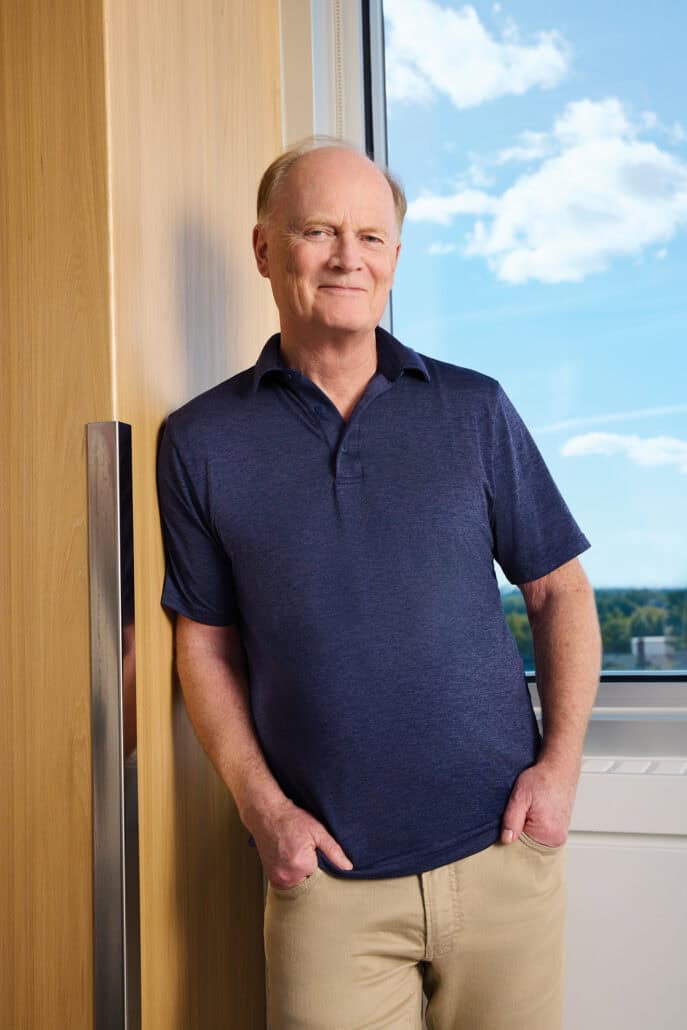
When Dr. Michael Smylie was a young oncologist contemplating his future career, a trusted mentor advised him to specialize in a tumour group with relatively poor treatment options. While he’d likely have to give patients bad news more frequently than good, Smylie was intrigued by the opportunity to potentially — and perhaps even dramatically — change the odds for patients with the most unfavourable prognoses.
Smylie took his mentor’s advice and dedicated his career to working with patients with advanced melanoma, a skin cancer with a historically low rate of survival. Now, over 30 years later, as he transitions towards retirement, Smylie looks back, gratified that he made the right choice. Thanks to his work in immunotherapy research, melanoma patients throughout Alberta have received early access to a game-changing therapy, allowing for more quality time with loved ones, and in an astonishing number of cases, long-term survival.
“Oncology back then [in the 1980s and 1990s] was, what I like to refer to, ‘in the dark ages.’ It was mostly chemotherapy. We didn’t really have a lot of biologic agents or targeted therapies,” Smylie says. “Then we saw these [immunotherapy] drugs come out, and although skeptical at first, I saw patients’ cancers disappear and never come back. Then, we saw survival curves start to change. More importantly was what we had never seen before: they plateaued. As we followed the survival curves from the trials, the curves remained flat after three years — and people started to talk about cures.”
A search for optimism
After completing his medical oncology training at the University of Ottawa, Smylie arrived at Edmonton’s Cross Cancer Institute (Cross) in 1994. He explored a few other tumour groups, but soon committed to treating melanoma patients. Smylie describes survival rates for advanced melanoma patients at the time to be “dismal,” with only two to four per cent of patients surviving past the five-year mark and a median survival rate of just over six months. Moved by the tenacity of his patients, Smylie offered the best care he could, developing a determination to seek out more effective treatments through clinical trials and emerging research.
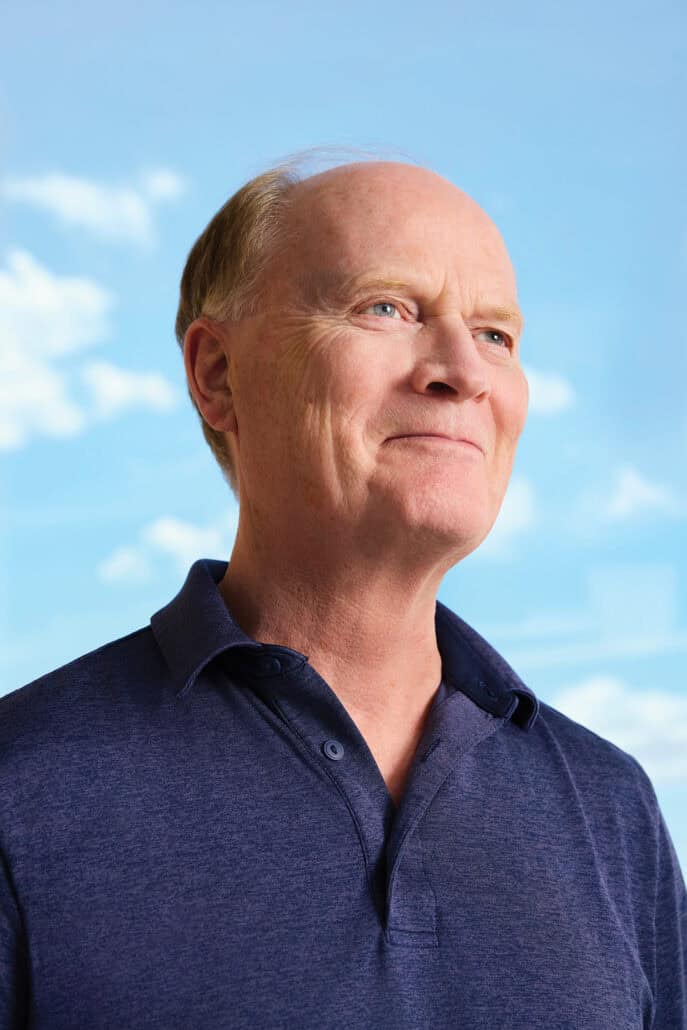
“What really stuck with me were the patients,” Smylie says. “You got quite close to your patients — and melanoma patients are really a special group.”
Using individuals’ own immune systems to fight cancer isn’t a new concept, but real breakthroughs in immunotherapy didn’t begin to emerge until the early 2000s, when researchers started clinical trials of checkpoint inhibitors. Cancer cells trick the body’s immune system into turning off “checkpoint” receptors, which are proteins on immune cells, allowing the cancer to grow. Checkpoint inhibitors are a modern immunotherapy treatment that keeps those checkpoint switches on, encouraging the immune system to naturally attack cancer cells. Smylie recognized the potential in these therapies after seeing some miraculous results in the early trials and became an early adopter, offering clinical trials to his melanoma patients at the Cross.
At the forefront of immunotherapy revolution
Through his clinical trials, Smylie saw firsthand how the drugs being trialled — first ipilimumab and then PD-1 inhibitor — were having a positive effect on his patients. Still, some oncologists were concerned about toxicity and side-effects. There was also a risk that the trial data could be overlooked or dismissed, with some researchers focusing solely on patients’ response rates rather than monitoring the drugs’ effects on those who did respond. But Smylie saw that even in the early trials with a relatively modest response rate of around 10 per cent, those who did respond weren’t just granted a few more precious months or years, as other cancer patients might with other therapies; they went on to achieve long-term survival. For all intents and purposes, they were cured of their cancer. To Smylie, that’s what made immunotherapy a potential game-changer.
“Edmonton was really the pioneering centre in the country in that we got into immunotherapy very early,” Smylie says.
“I got very lucky because two of the first patients I treated with ipilimumab were in their 30s and they had complete responses. Their tumours completely disappeared and I became a real believer in immunotherapy.”
—Dr. Michael Smylie
As the science developed and more immunotherapy options emerged, Smylie and the team at the Cross continued to spearhead clinical trials, improving the outcomes of many of their patients. Smylie says his most significant involvement was in the CheckMate 067 Phase III trial, which combined ipilimumab with PD-1 inhibitors and yielded astonishingly positive results. The Cross’s involvement in that study won the centre considerable recognition, with its results being published in major medical journals including The New England Journal of Medicine.
Smylie is still involved in a few immunotherapy studies and he is planning to take on a temporary role as an oncologist in a melanoma clinic next year. But as of 2022, he was mostly retired from his melanoma and clinical trial practice. He was able to leave immensely satisfied, having seen the long-term survival rate of advanced melanoma patients grow to 52 per cent after the therapy trialled in the CheckMate 067 study became standard of care.
A lasting legacy
Dr. Matthew Anaka, who now oversees Smylie’s former melanoma practice, recognizes his predecessor as a mentor and source of personal inspiration, as well as a deeply positive force in countless patients’ care.
“I’ve met many people who are alive and well only because Dr. Smylie opened the checkpoint inhibitor trials here in Edmonton, getting them early access to what has gone on to become our most effective treatment,” Anaka says. “Without receiving the treatment on trial, those people would not be here today. They all recall his absolute delight in seeing their cancers respond, having prepared himself, and them, for a very different outcome.”
As with many passionate medical professionals, Smylie’s retirement has been gradual. While he’s mostly moved on from melanoma, he’s still searching for ways within the system where he can make the most impact. Earlier in his career, he travelled to the Northwest Territories to run cancer clinics for the northern population and resumed the practice a few years before leaving his melanoma work. These days, he runs a monthly clinic in Yellowknife, acting as a general oncologist to provide the best care to a geographical population typically underserved by medical specialists.
While his northern clinics are adding meaning to the final act of his career, Smylie knows his contributions to melanoma care and immunotherapy will serve as his legacy. Immunotherapy is now being successfully used for a wide range of other kinds of cancers, and researchers are exploring new immunotherapy drugs to treat the percentage of patients who aren’t responding to current treatments. Knowing he played a part in establishing immunotherapy as the standard of care for so many patients has been deeply fulfilling for Smylie, both personally and professionally.
“I teased my colleagues that immunotherapy started in melanoma and kind of metastasized to every other tumour site,” he says. “It was tough to leave melanoma, but I did have a sense of extreme happiness that we made so much progress during my years there. People started to refer to it not just as a breakthrough, but as a revolution.”
Four questions with Dr. Smylie
What’s the biggest misperception about what you do?
“People used to think oncology was a depressing field. They believed that for terminal cancer patients, we just gave them chemotherapy and they suffered through that chemotherapy, then they died. That has really changed, because now we’re really seeing more improved outcomes.”
If you weren’t an oncologist, what would you be doing?
“I love to travel. Travelling to Europe and seeing the history and the architecture has always been fascinating. I’ve always been a big history buff, and I’m quite into cycling, too. When I do fully retire, I think I’ll still keep reading history, but I plan to do more cycling and just try to stay as active as I can.”
What was the hardest lesson you’ve learned?
“To stay focused on what you’re trying to do. Even with the success rate we have in melanoma, many of our patients still die of the disease, and you take that personally.”
What motivates you?
“The patients. There are some patients that I will never forget. They had such an impact on my life.”