Meet three physicians helping Albertans live longer, better and celebrate more experiences after a cancer diagnosis.
By Nathan Kunz
Dr. Stella Koumna
Nuclear medicine physician, Cross Cancer Institute
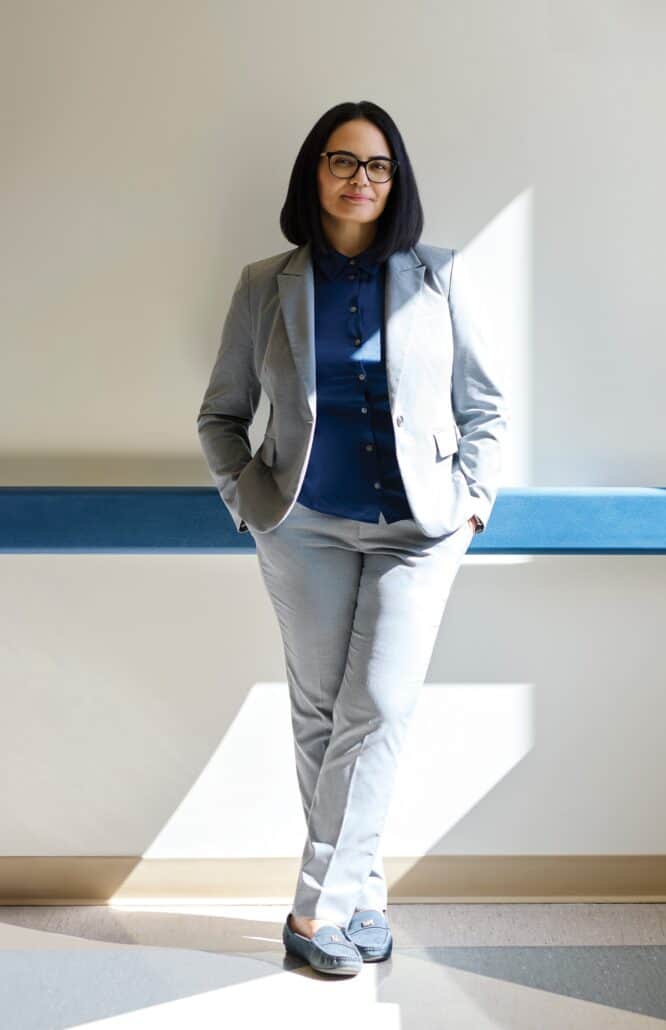
Dr. Stella Koumna initially moved to Alberta because of family ties, relocating from Cyprus to Fort McMurray in 2013. But it was a nuclear medicine fellowship opportunity at the Cross Cancer Institute (Cross) that pulled her to Edmonton in 2016. The decade since has seen nuclear medicine expand and evolve — though according to Koumna, the most rewarding moments remain the same.
“It’s patient feedback that gives the gratification,” says Koumna. “Hearing how this treatment may have changed their life, it’s unparalleled.”
Koumna belongs to a highly specialized, multidisciplinary team that uses radioactive substances to image, understand and treat cancers. Edmonton has been a nuclear oncology hotspot since the late 1980s, when Koumna’s mentor, Dr. Sandy McEwan, began administering theranostic treatments — a true-to-name approach that combines “therapy” and “diagnostics.”
Theranostic treatments start by intravenously administering radioactive agents into the bloodstream — first for imaging, then for treatment. Viewed using a PET scan, these agents help physicians locate cancer, observe it on a molecular level and determine if treatment will be effective.
Imaging also allows physicians to monitor radioactivity distribution, enabling them to maximize radiation to cancer cells while minimizing damage to surrounding tissue. After each session, post-therapy imaging shows how much of the treatment is entering the tumour and how it’s changing as a result.
“If, for example, the imaging no longer shows the presence of uptake in the tumour, which means the tumours no longer take up the treatment, we can even stop the treatment early,” Koumna says.
In March 2025, two years following a trial supported in part by the Alberta Cancer Foundation, the Cross rolled out a theranostics program for eligible prostate cancer patients as standard of care. Koumna and her team did so with no waitlists attached.
“We felt it was our obligation to make every possible effort to minimize delays,” says Koumna. “It’s a drive to give everybody the same chance at a treatment that could improve their life.”
Koumna is hopeful as she looks towards the next decade in nuclear medicine. The framework for more personalized care is in place, and Alberta is at the centre of it all.
“No pun intended, [but with] theranostics, radioactivity and the photons emitted from our agents,” she says, “but the future is bright.”
What does creating “more time” mean to you?
“‘More time’ resonates deeply with what we do every day. While extending survival is important, it’s equally important to improve what patients can do with the time they have. More moments can mean attending a family celebration, taking a trip or simply enjoying everyday activities with their loved ones. Our goal should not only be to help patients live longer, but to help them live better, so they can achieve what more time means to them.”
Dr. Nadia Ghazali
Medical oncologist, Cross Cancer Institute
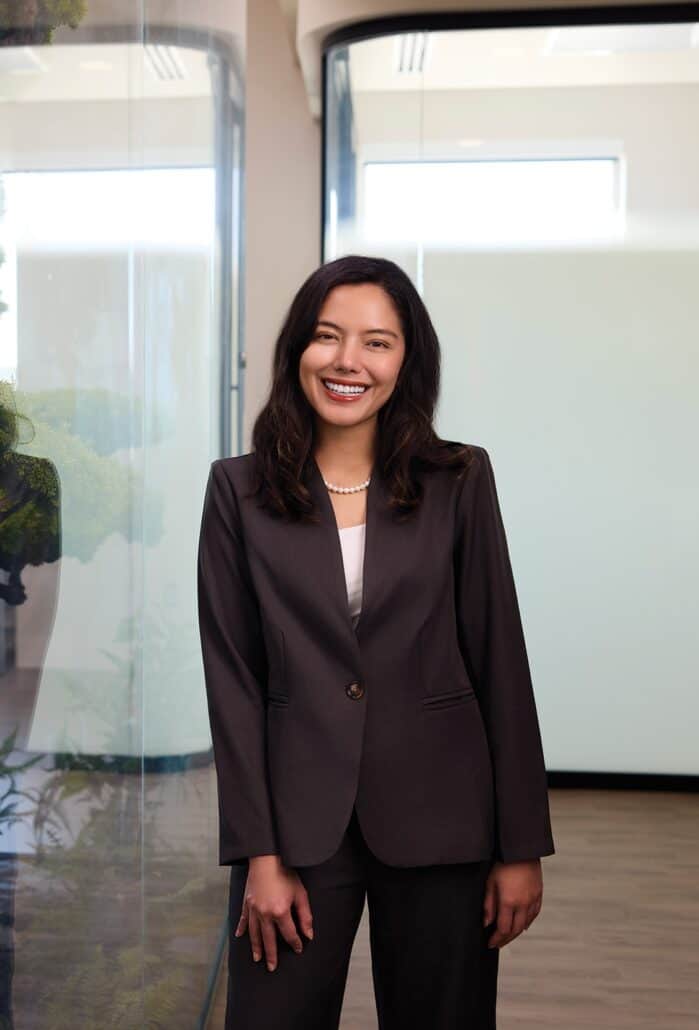
Meeting an oncologist can be intimidating. It’s a vulnerable situation that often comes with hard conversations. For Dr. Nadia Ghazali, it also comes with a responsibility to be forthright from the start.
“Our patients put so much faith in us; in the oncologist, in the nurses, in everyone involved in their care,” Ghazali says. “My goal is to make sure that my patients are well informed and always able to make decisions that align with their own goals and values.”
Ghazali specializes in genito-urinary oncology and thoracic oncology (this includes lung and other cancers that affect the chest cavity). Originally from Malaysia, Ghazali attended medical school at the University of Newcastle in Australia. It was there that she learned her father had terminal brain cancer, inspiring her to pursue a career in oncology.
“The biggest factor is that there’s still hope for patients,” she says. “Every single thing you do, big or small, contributes to advancement.”
Ghazali went on to complete her medical school and training in Australia, followed by a lung cancer fellowship at Toronto’s Princess Margaret Cancer Centre. Then, in fall 2025, she moved across Canada to begin her career at the Cross Cancer Institute (Cross).
In Edmonton, Ghazali hopes to increase access to liquid biopsies. Rather than obtaining a tissue sample through an invasive procedure, a liquid biopsy uses blood, urine or cerebrospinal fluid samples carrying shed protein or DNA from the tumour site. Not only are liquid biopsies less invasive, they can also offer quicker turnaround times, leading to quicker treatment decisions.
Liquid biopsies are not yet standard of care in Alberta. However, by helping lead clinical trial research, Ghazali is hopeful more Albertans will soon have access to this innovative diagnostic approach.
Over the past year and a half, she has seen Albertans receive world-class care when they need it most. And at the Cross, she says inspiration isn’t hard to find.
“You don’t need to seek out the passion here,” says Ghazali. “It just comes to you.”
What surprises people about your work?
“When I tell people I’m a medical oncologist, they’ll often say: ‘Oh, wow, what a hard job.’ But it’s actually very rewarding. Cancer care has changed dramatically over the last 10 years. And as an oncologist, you’re with patients at every step, helping to make a difference whenever possible.”
Dr. Joe Kendal
Orthopedic oncology surgeon scientist, Foothills Medical Centre and Alberta Children’s Hospital
Clinical assistant professor, Cumming School of Medicine, University of Calgary
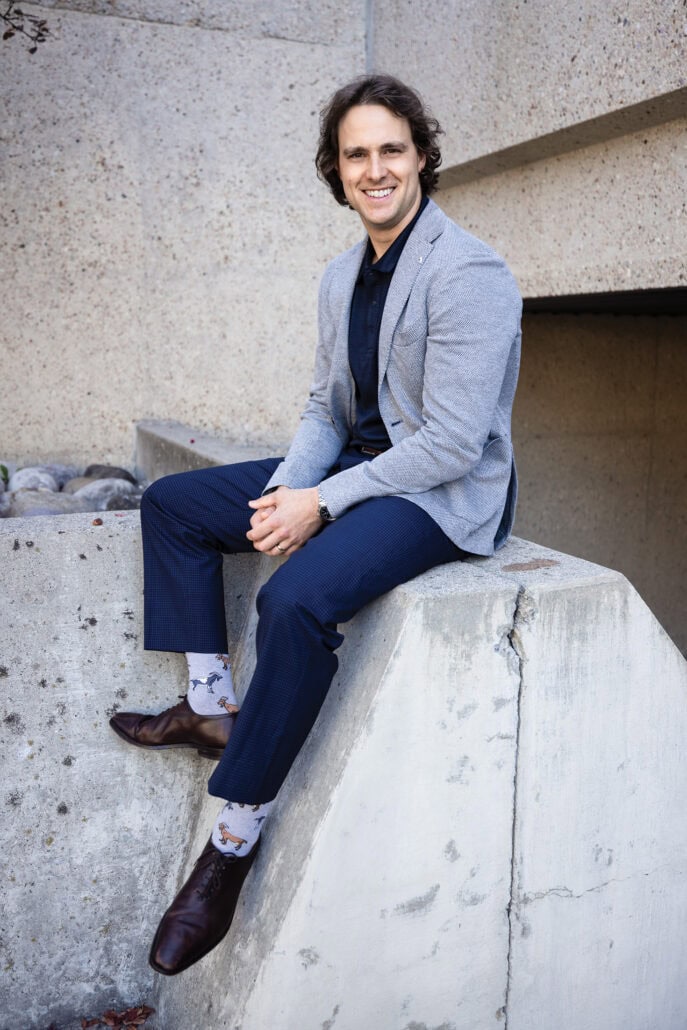
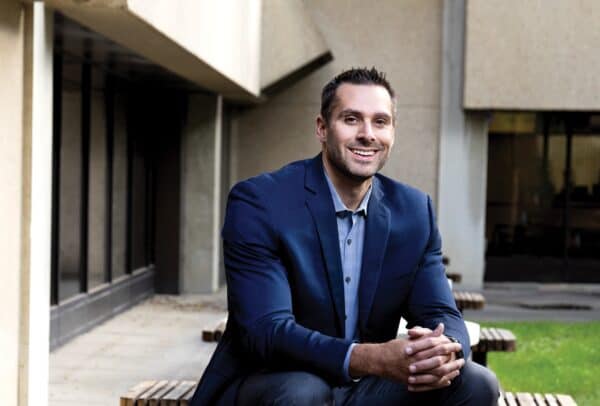
Big questions call for innovative solutions. That’s exactly what attracted Dr. Joe Kendal to oncology.
A born-and-raised Calgarian and University of Calgary alumnus, Kendal focuses on sarcomas and metastatic bone disease (MBD) — cancers that impact the bones, muscles, tissues and ligaments that help patients move. On any given day, Kendal can be found in the clinic and performing procedures at the Foothills Medical Centre, in an operating room at the Alberta Children’s Hospital or leading research for the University of Calgary.
Kendal’s work recently expanded to another frontier — namely, the Apple App Store.
In 2025, Kendal co-created Activation Health with his two University of Calgary colleagues — spine surgeon Dr. Fred Nicholls and exercise physiologist Dr. John Holash. The smartphone application tracks patients pre- and post-surgery, gathering data like their step counts and gait quality, information that can help guide rehabilitation and monitor healing progress. Paired with self-reported surveys, Activation Health shares findings with the user’s medical team, optimizing post-op care based on patient needs.
“The entire goal is to decrease patient burden,” says Kendal. “The app is downloaded to their phones, then they just go live their lives.”
Early feedback is promising. Pilot data from 30 users shows that patients are finding the app easy to use and it’s delivering accurate mobility metrics. And this past spring, one of Kendal’s graduate students defended a thesis that used the app.
Activation Health represents just one way Kendal is innovating in oncology. His SMarT Bone Program helps surgeons, specialists and kinesiologists in southern Alberta share databases, improve triages and smooth referral pathways for MBD patients. In the operating room, Kendal is implementing novel, minimally invasive surgical techniques and 3D-printed implants, with the goal of helping patients get back to living their best life faster.
Paired with programs like Activation Health, Kendal says seeing the difference he’s making in numbers is extremely rewarding. But nothing beats seeing a patient walk back into the clinic, climb a set of stairs and say “thank you” in person.
“We can look at the data,” says Kendal, “but when you see somebody doing it, it makes an even bigger difference.”
Sarcoma most often affects young people. What does it mean to you to serve a young patient population?
“Working with this population is incredibly meaningful. It’s a very scary time in their lives, both for the patients and their families. It’s special to ensure families know that we have a comprehensive sarcoma program in Calgary, and that we’re going to provide the best care that we possibly can. I’m proud to be part of this group.”